

Home · Industries · For developer tools companies
Built for the company developers evaluate at midnight.
Every evaluation, POC, and expansion thread worked overnight, with the reason attached.
Your product gets tried at midnight and judged in a team channel the next morning. The engineer who tried it becomes your case; what they get from your team in the days after decides whether the evaluation becomes a rollout.
What does Midsummer do for a developer tools company? Midsummer works every account overnight: it reads each evaluation, POC, and customer relationship, chooses the next move and says why, and readies the meeting brief, the follow-up note, and the answer in the thread. Anything it does opens in the log with its source, so the team can check the grounding.
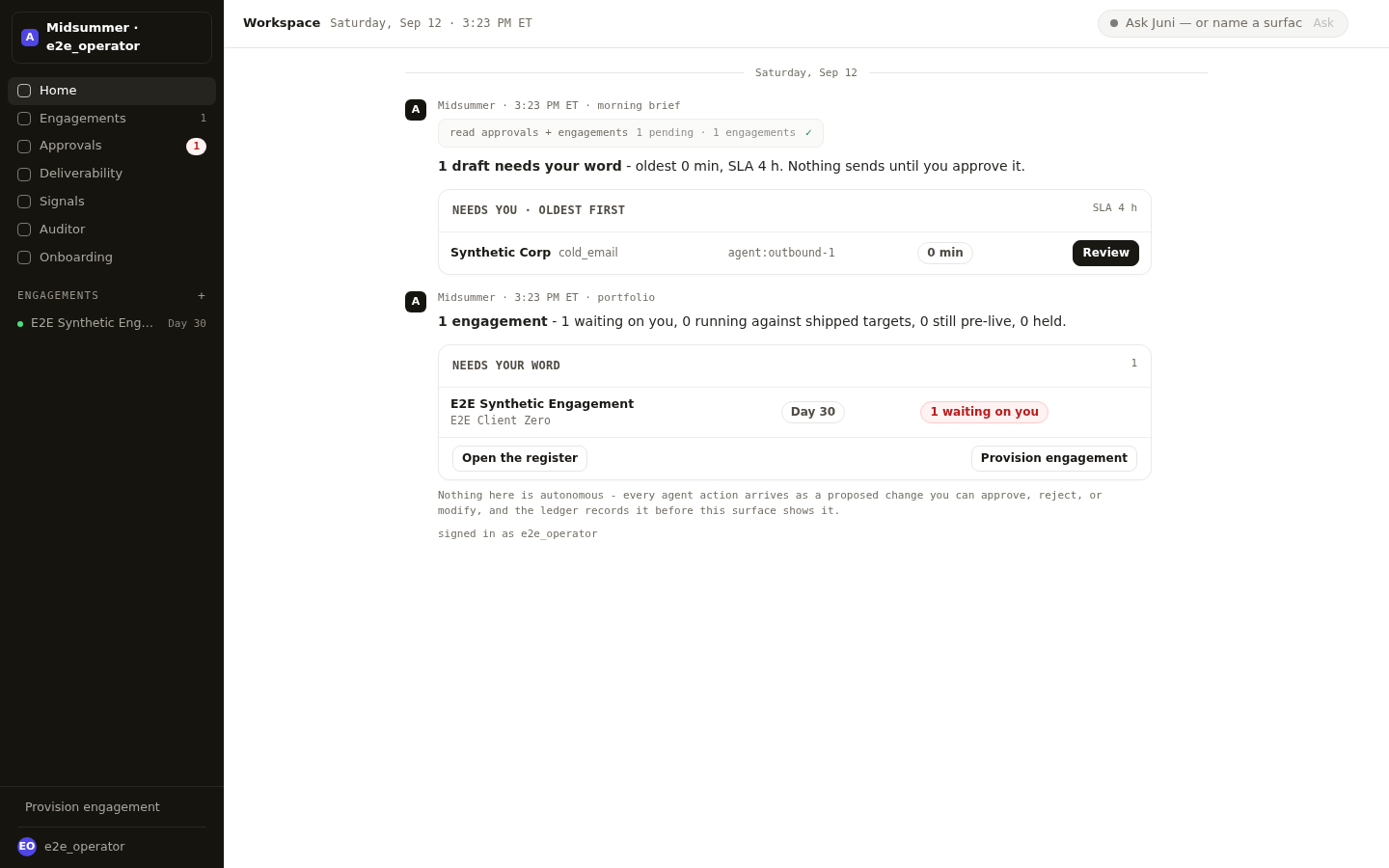
Back the engineer making your case
Next in the product: Open the brief, then send the answer their manager asked for.
The cluster index
Three leaves cover the developer tools matrix
What slips
The engineer carries the evaluation
A developer tool wins when an engineer argues for it in front of their manager. The answer that engineer gets from your team, in the thread, on time, is what they argue with. Midsummer writes each answer from the thread, and a person on your team approves it before it leaves.
How the department works it
Long evaluations, worked accounts
Evaluations run weeks, and the quiet stretch after the first try is where most die. The department works those accounts nightly and drafts the note that restarts the evaluation while the product memory is still fresh.
The proof
Proof an engineering-led team can check
The log shows what ran, what it said, and what came back, each with its source. A team that reviews every pull request can review this the same way: open any action and read it.
Questions developer tools teams ask
How does Midsummer learn our accounts?
From your CRM, your inbox, and the materials you already have. It reads what each account has said and done before it writes a word, and keeps the source attached so the grounding is checkable.
Will it sound like marketing to engineers?
It writes from the thread and the account, in plain words. The department prepares and people send; every action carries its source, so your team checks what was written and why before anything leaves.
What does it take to start?
Read access to CRM and inbox, scoped in writing when you onboard. End the access and the work ends with it. There is nothing to migrate, and nothing new for the team to learn.
Will our users know it is involved?
Nothing leaves under any name but yours. The worked history stays open to the team: what ran, what it said, and what came back.
Related
For AI-enabled B2B softwareFor data and API companiesFor security companiesThe developer tools matrix
Each connector lights up when you grant access.
Send the list of evaluations in flight and see it worked end to end. Or ask for access; the team writes back.