

Home · Industries · For financial services firms
Built for the firm whose inbox is its client list.
Every client, carrier, and partner account worked overnight, with the reason attached.
Your work runs on regulated relationships: clients, carriers, partners. Follow-up slips between client meetings, and here a slow or careless reply costs the relationship, not just the deal.
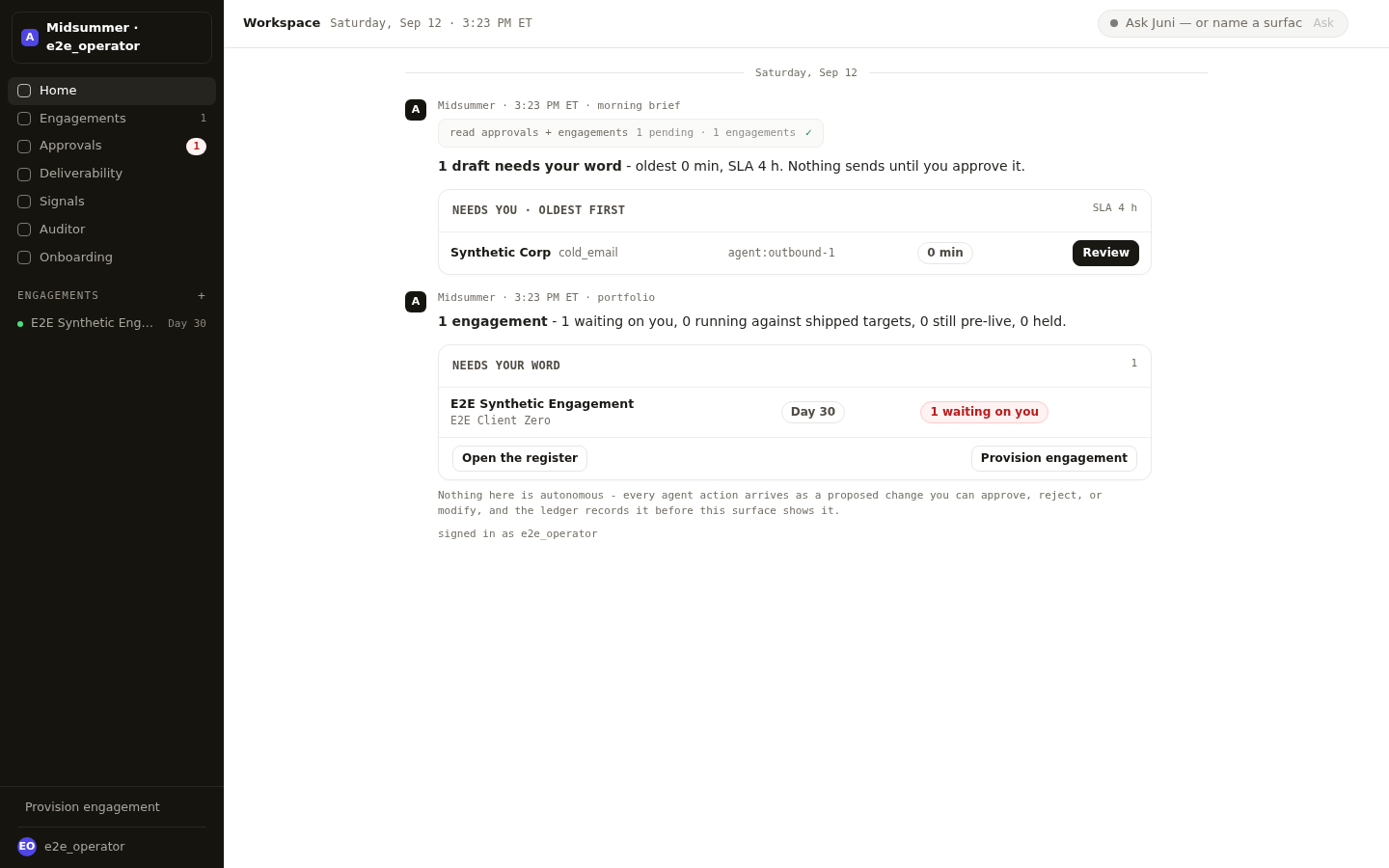
What does Midsummer do for a financial services firm? Midsummer works every account overnight: it reads each client, carrier, and partner relationship, picks the next move and attaches the reason, and readies the brief, the follow-up, and the in-thread answer. Each action lands in the log with its source, so the grounding is checkable.
The cluster index
Three leaves cover the financial services matrix
What slips
The relationship is the asset
A slow or careless reply does not cost one deal here; it costs the relationship that produced it. The work that slips between client meetings is the work that was the service. Midsummer writes each answer from the thread, and a person on your team approves it before it leaves.
How the department works it
Long relationships, worked accounts
Finserv relationships run years, and the stretches between reviews are where the work slips. An account that goes quiet after a review still gets worked: the department says so, with the reason attached, and writes the way back in.
The proof
Proof a compliance team can check
The log is the evidence: what ran, what it said, and what came back, each with its source. A firm that audits its vendors can audit this the same way - open any action and read it.
Questions finserv teams ask
How does Midsummer learn the space?
From your CRM, your inbox, and your own materials. The department reads what your accounts have said and done before it writes a word, and it keeps the source attached so the grounding is checkable.
Can it handle regulated relationships?
That is the design center: it drafts, it does not send, and every action carries its source, so the firm can check what was written and why before anything leaves.
What does it need to start?
Read access to your CRM and inbox, scoped in writing when you onboard. Cut the access and the work stops. There is nothing to migrate and nothing new for your team to learn.
Will our clients know it is involved?
Nothing leaves under any name but yours. The worked history is open to the firm: what ran, what it said, and what came back.
Each connector lights up when you grant access.
See the morning list run on your real accounts. Or ask for access; the team writes back within a day.